

ROAD PROFILING
This case study explores the application of Road Profiling / Planing of Stansted Airport Access Road
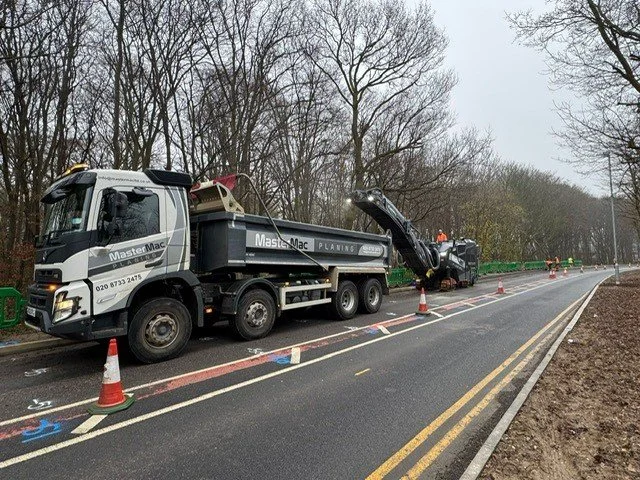
Stansted Airport is one of the busiest airports in the UK, with constant traffic flow at all times of the day. The project’s scope involved removing the existing road surface to the required depth, profiling the base course to ensure proper drainage and smoothness, and laying a new surface layer. This had to be completed while minimising disruptions to the airport's ongoing operations and ensuring the safety of the construction team and road users.
Challenges Encountered:
One of the key challenges of this project was the necessity to carry out the work with minimal disruption to traffic, especially since Stansted Airport is a high-traffic area. Given the narrowness of the access road, a one-lane closure was required for safety reasons. This posed the following challenges:
Limited space for roadworks: With only one lane available for traffic, there was limited space for both construction equipment and vehicles.
Project Execution
1. Planning and Coordination
Traffic Management Plan: The plan included marked diversion routes, signage, and personnel on-site to ensure that the remaining open lane was efficiently managed.
2. Equipment and Methodology
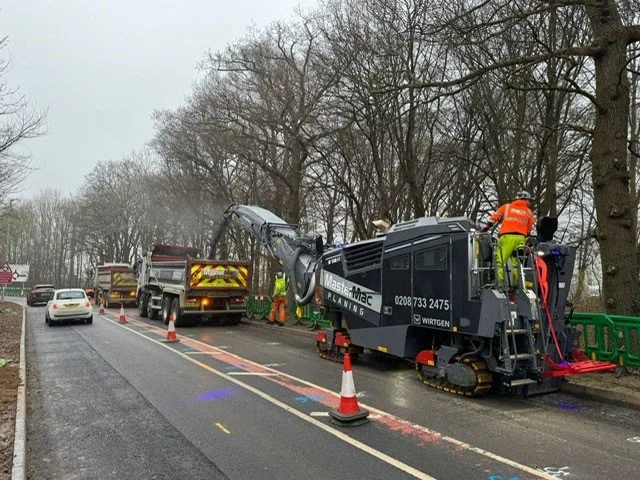
The project required specialized equipment for profiling and planing, including large milling machines and road planers that were carefully maneuvered within the tight lane constraints.
Equipment was positioned on-site with minimal disturbance to the flow of traffic, and workers were tasked with ensuring smooth transitions for vehicles moving past the site.
Profile Milling: The milling process was carried out on the existing asphalt, cutting to the required depth. The crew worked meticulously to avoid damage to the underlying roadbed while removing the old surface.
Efficient Lane Usage: The one-lane closure meant that all equipment had to be compact and maneuvered efficiently. Workers also communicated directly with traffic management personnel to ensure the smooth passage of vehicles.
3. Safety Measures
Safety was a primary concern throughout the project, with multiple measures put in place to protect both workers and the public. These included:
Temporary Barrier Systems: Used to separate traffic from the work zone and create a safe environment for construction activities.
Traffic Marshals: Positioned at strategic locations to direct vehicles safely through the narrowed road space.
Successful Completion
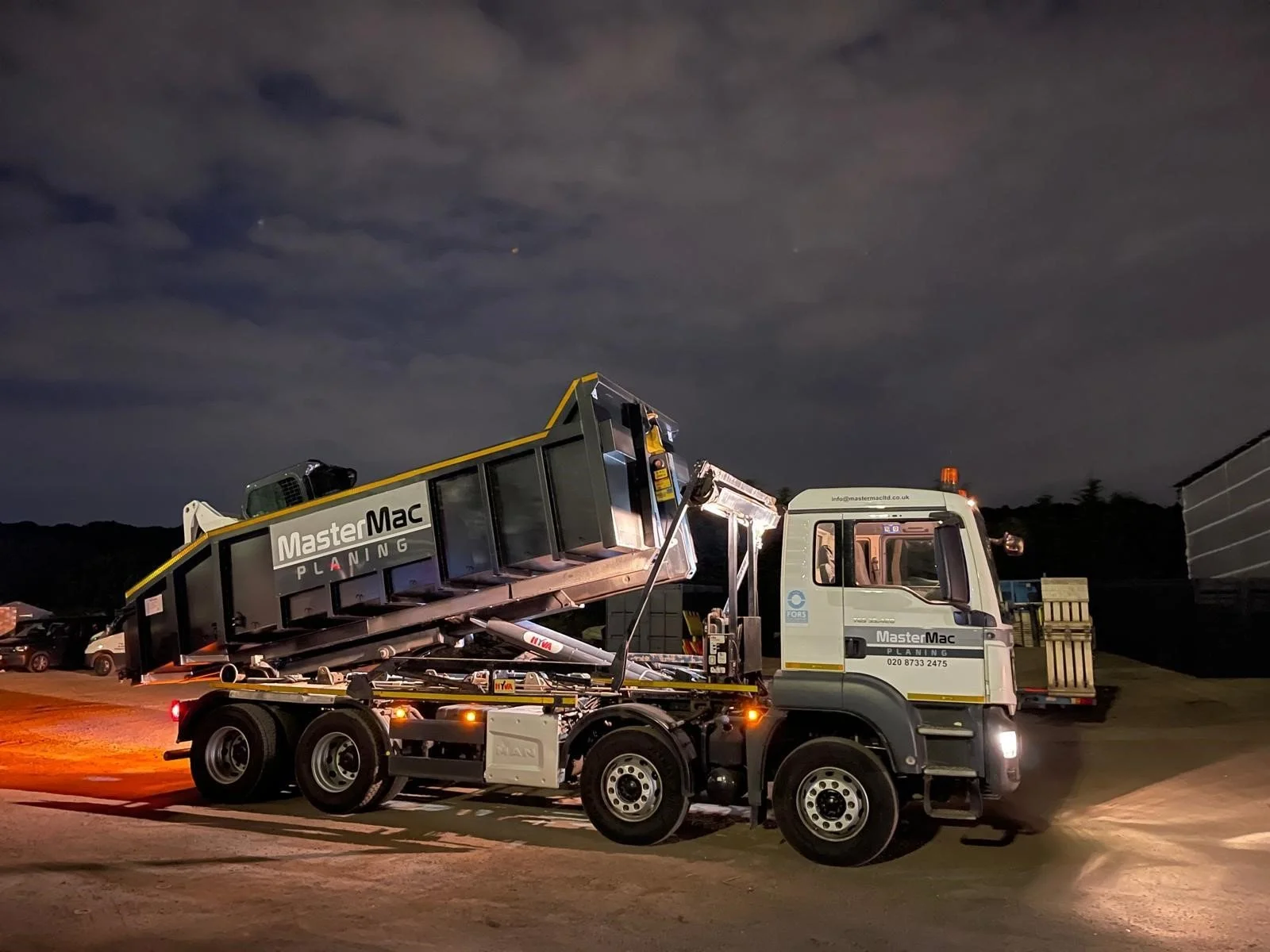
Despite the challenges of working with a one-lane closure, MasterMac Planing ensured the continuous flow of traffic by coordinating effectively with the airport's team and ensuring minimal disruption to airport operations.
Results and Benefits
Minimized Disruption: The one-lane closure was carefully managed, and off-peak work schedules ensured that traffic flow was not significantly impacted.
Safety: The safety measures put in place ensured a safe environment for both workers and drivers.
Cost-Effective: Working efficiently within the one-lane closure resulted in cost savings for the project while minimizing the impact on the airport's operations.
Conclusion
MasterMac Planing's successful completion of the road profiling and planing works at Stansted Airport access road highlights the company’s ability to tackle complex road maintenance projects. By working collaboratively with airport management and adhering to strict safety protocols, MasterMac Planing ensured that the project was completed without compromising safety, quality, or operational efficiency.
This case study serves as an example of how specialized planning, effective traffic management, and high-quality execution can lead to successful roadworks in even the most challenging environments.